
Frost Around the Corner
all about Yaupon | the last flowers

Last time I wrote, I mused about embracing death and the end of the growing season. This past week found me resisting season’s end completely. It’s been about getting new plants in the ground, racing against the upcoming freeze, and refusing to close up shop in the garden just yet.


Late fall, with mild temperatures and more generous rainfall, is a great time to plant trees and shrubs. I took the opportunity to add a new tree and a couple blueberry bushes. Outside the active growing season, the plants can focus on the quiet work of root development. Deep and strong roots will help them weather whatever the next season brings.
New Discovery: Yaupon Holly
Back in August, I heard a story on the radio about the Yaupon Holly. It suggested that if your coffee is getting too expensive, you might try this source of caffeine native to North America. Evidently, it was a popular beverage in centuries past and an important part of Native American culture too. As an ardent tea enthusiast, I knew this was something I had to try.
So I ordered yaupon tea online and it was good! My older son said it tasted slightly of raisins, which is oddly accurate. It does have a unique earthy sweetness. Anyway, I knew then and there that the garden needed a yaupon. Both native to the Southeastern US and a source of tea? Sign me up.
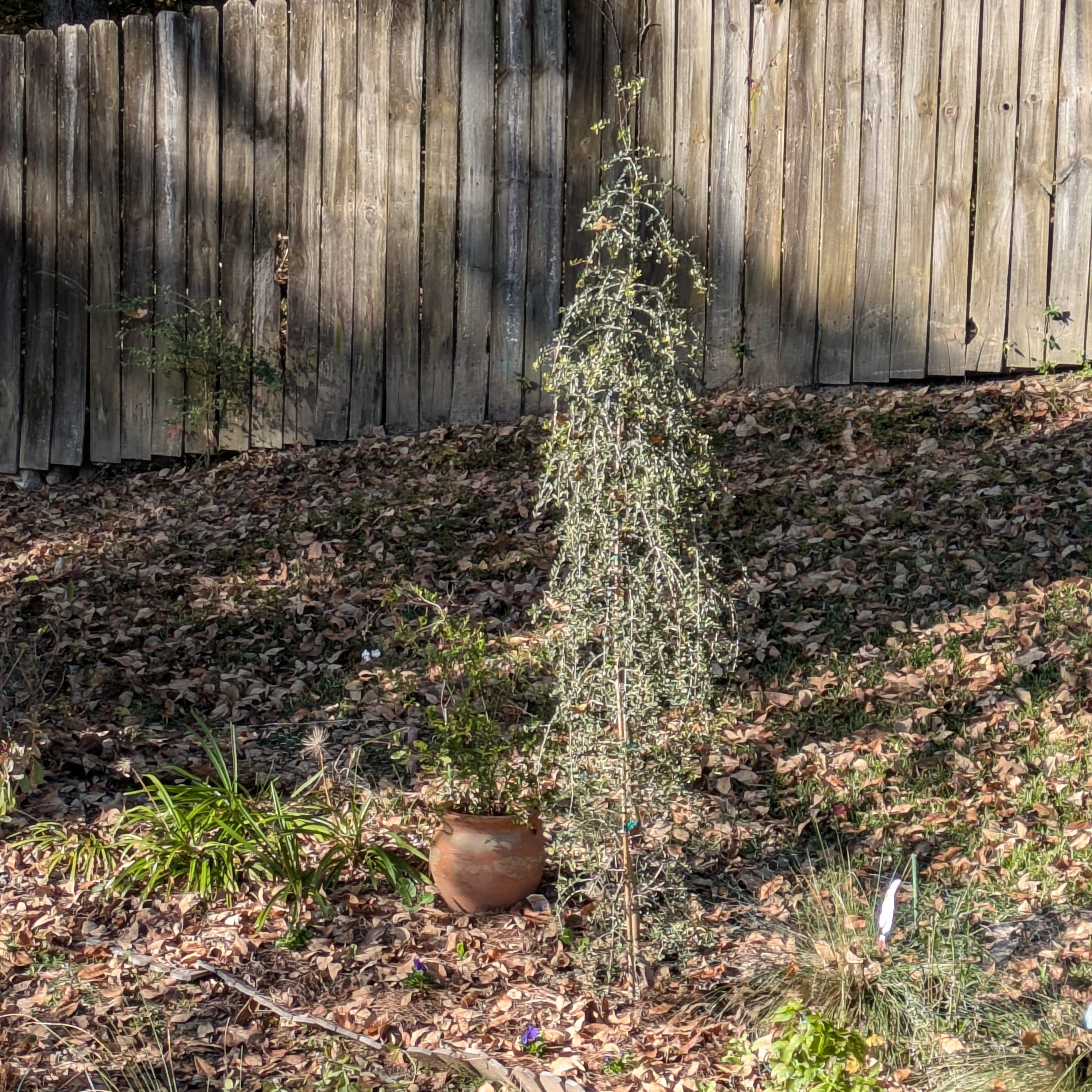
I researched different varieties and checked out local availability. As an evergreen, Yaupon is actually a popular landscaping plant in this area and is widely available in a dwarf variety, looking like a typical rounded holly bush. To my delight, I also discovered a large weeping variety, which is an upright form with “weeping” tendril branches. This is the one.
If you begin researching Yaupon, you may notice that its scientific name is Ilex vomitoria, which does not sound appealing. Despite the name, it does not cause vomiting. Early American settlers’ misunderstood the of Native use of the tea. While it was a common and safe drink of Native Americans, it was also used in a purgation ritual that involved vomiting. The ritual must've made a strong impression, and the name stuck.
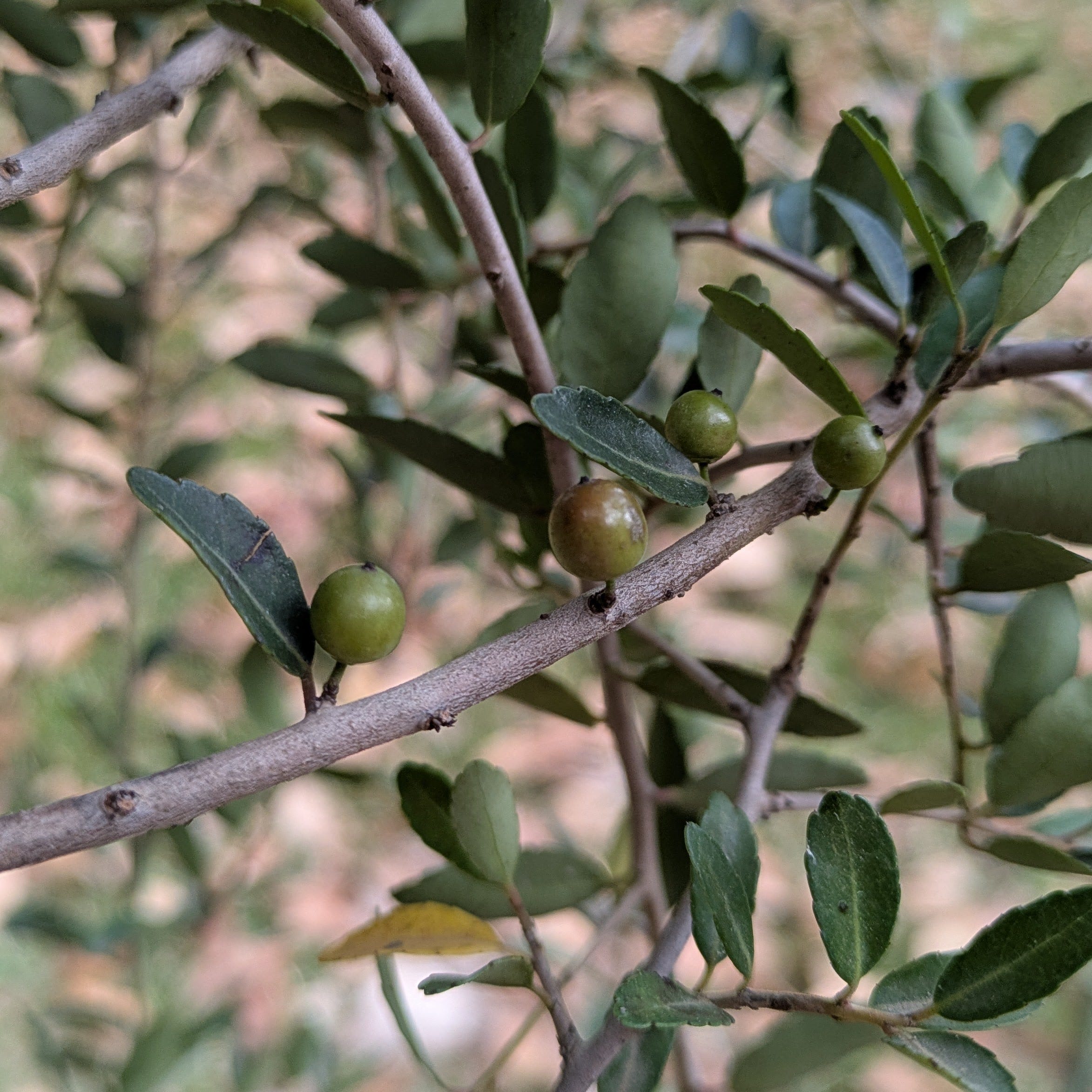
Anyway, I waited months before buying the plant because I read that if you want a female to produce red berries, you should wait until later in the season so they are easy to identify when the berries have set. It doesn’t matter for tea-making with leaves, but the berries are a pretty bright red and valuable for wildlife so I preferred a female plant.
This female plant proved elusive. My son, John Gabriel, gets credit for clambering through the mass of plants and finding our jackpot. There was one and only female we could identify. The berries are green and quite tiny, so not easy to spot.
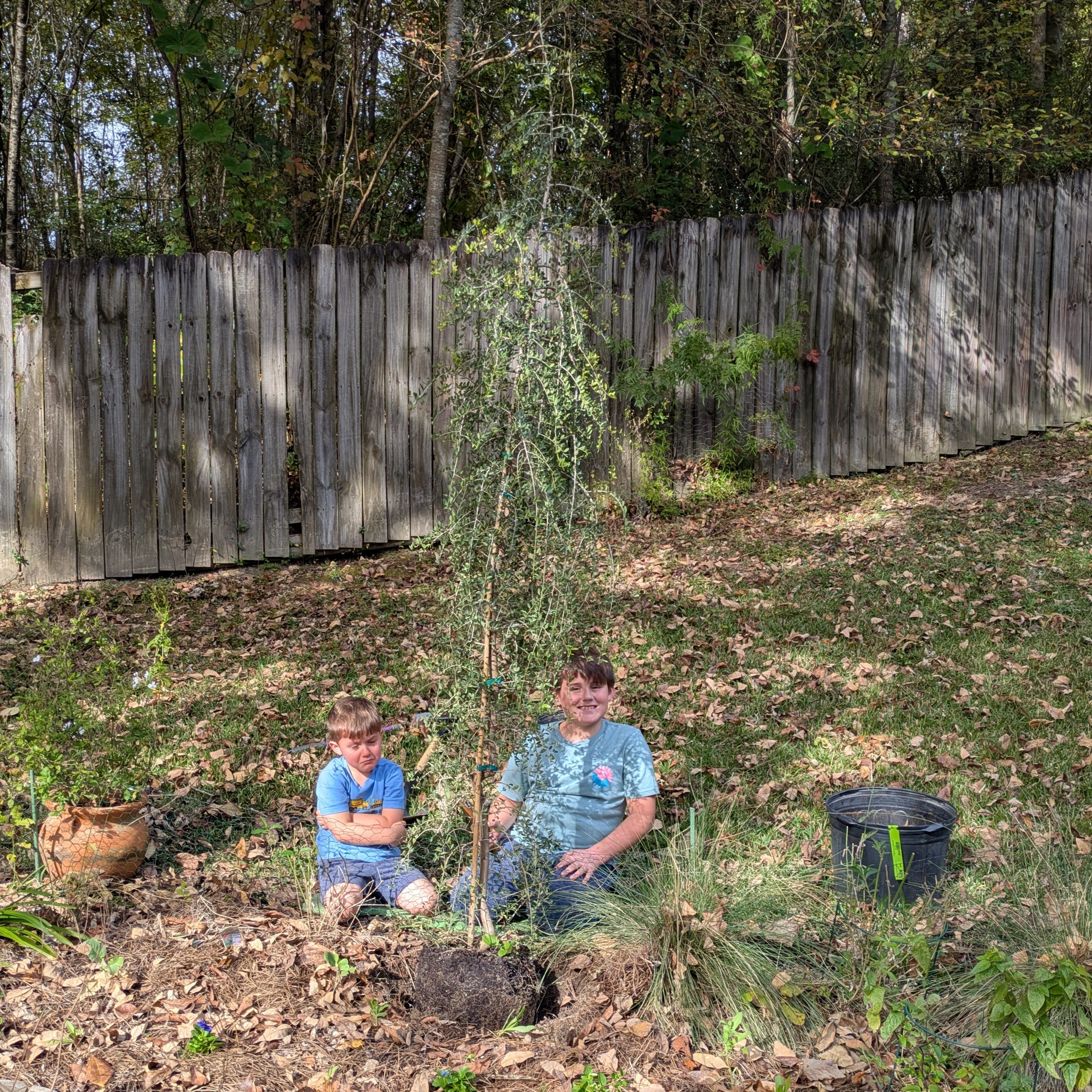
After finding our perfect plant, John Gabriel was so invested in the project that he helped me dig the large planting hole. And it’s not easy in our rocky soil! James had a problem sharing tools, but did his part to relocate worms and extra dirt.
And now we have a Yaupon Holly, the most local source of caffeine imaginable. I like the way gardening leads to all sorts of adventures.
The Last Flowers


Our first hard freeze is tonight, so I’ve gathered what I could of the last flowers for a small bouquet before everything is frozen. Dahlias and roses are late season holdouts, and seem to have saved their best and largest blooms for last.
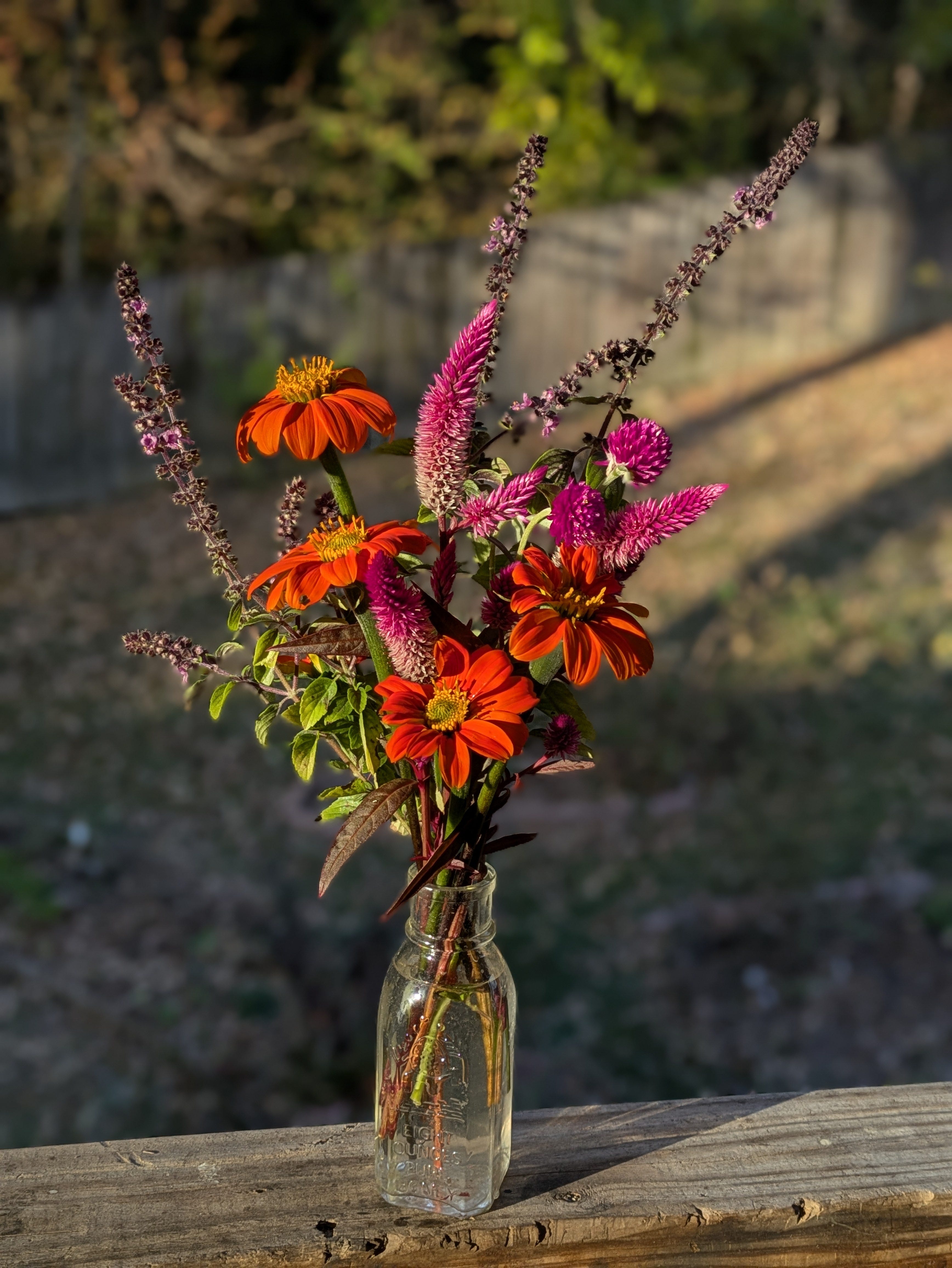
The last bouquet is a fiery assortment of magenta and orange: flamingo celosia, african blue basil and orange tithona. The flowers are not “going gently” and fading into winter; rather, they are going out in a beautiful riot of color.
Till Next Time - Peace!
Ashley
I've never heard of yaupon holly. I used to mix half dandelion root with my coffee to cut the caffeine, which was what I was wanting at the time. I'm gonna haveta look for that holly now though. It sounds good.